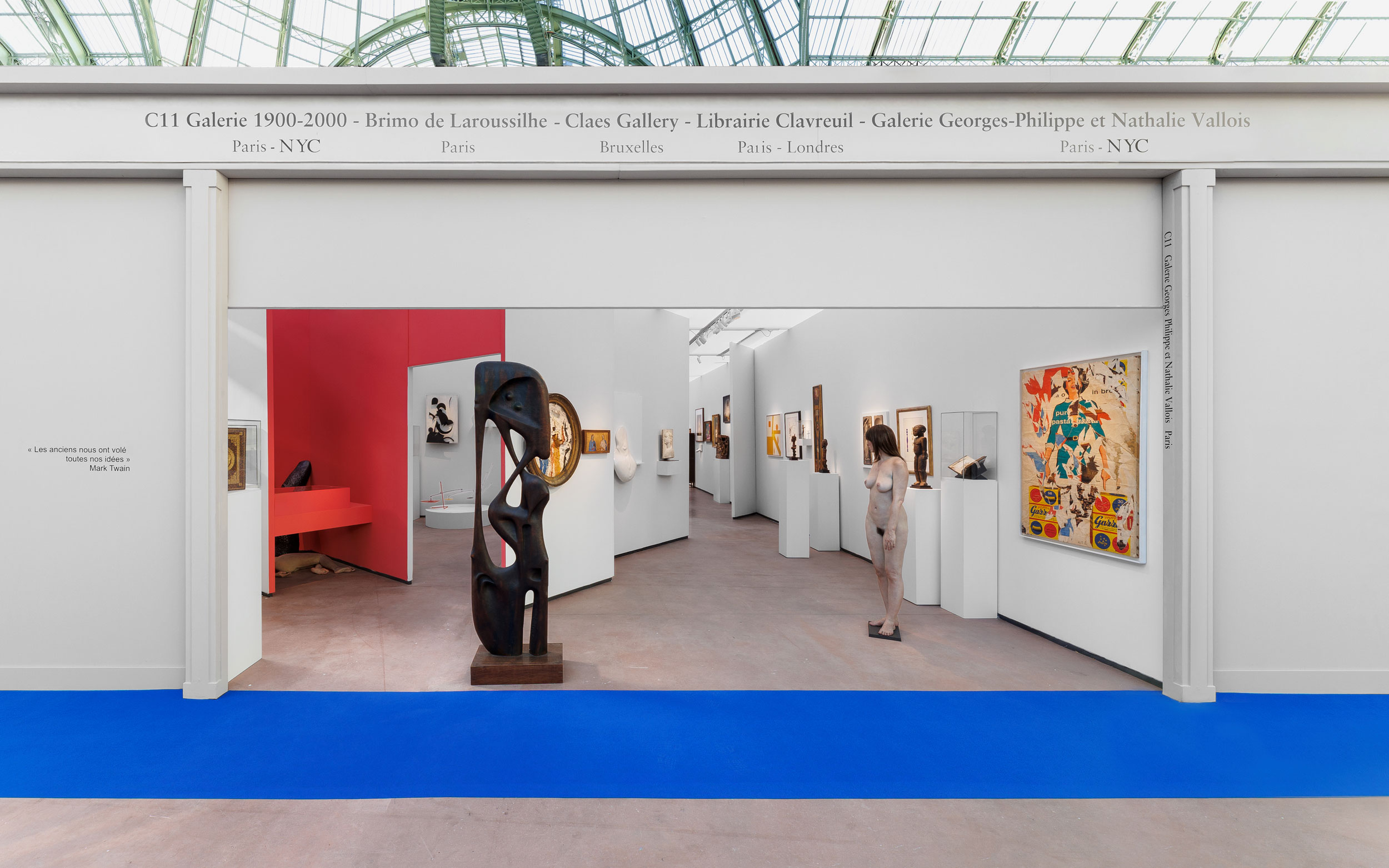
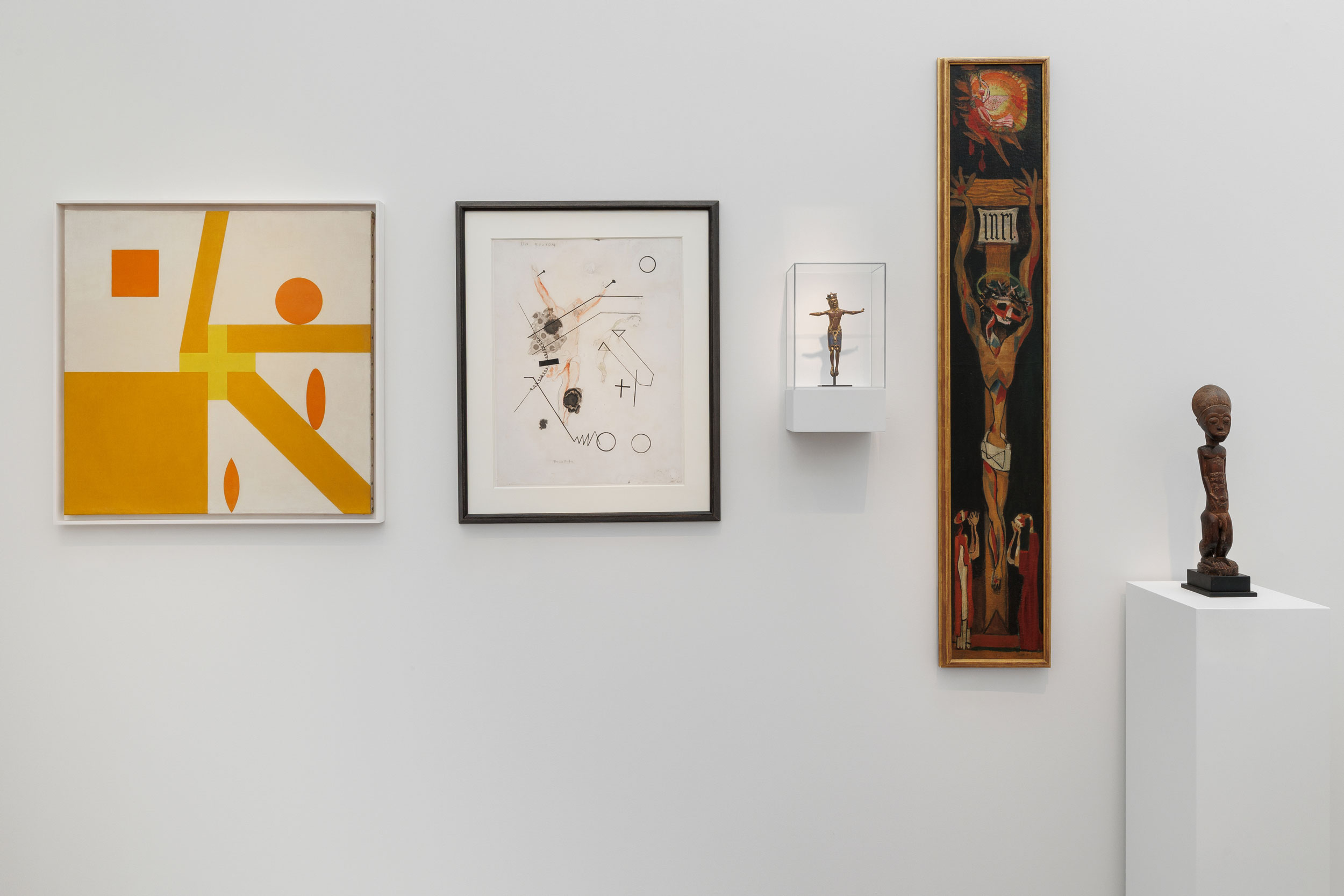
On Georges-Philippe Vallois’ initiative, the galleries 1900–2000, Brimo de Laroussilhe, Didier Claes, Georges Philippe & Nathalie Vallois, and the Librairie Clavreuil, operating in different artistic fields, collaborate to present a unique exhibition bringing them together. They submitted their list of artworks to Jean-Hubert Martin, former director of the Musée national d’Art moderne and curator of international exhibitions, enabling him to make a selection resulting in an open, cross-disciplinary exhibition entitled Disorderly beauties.
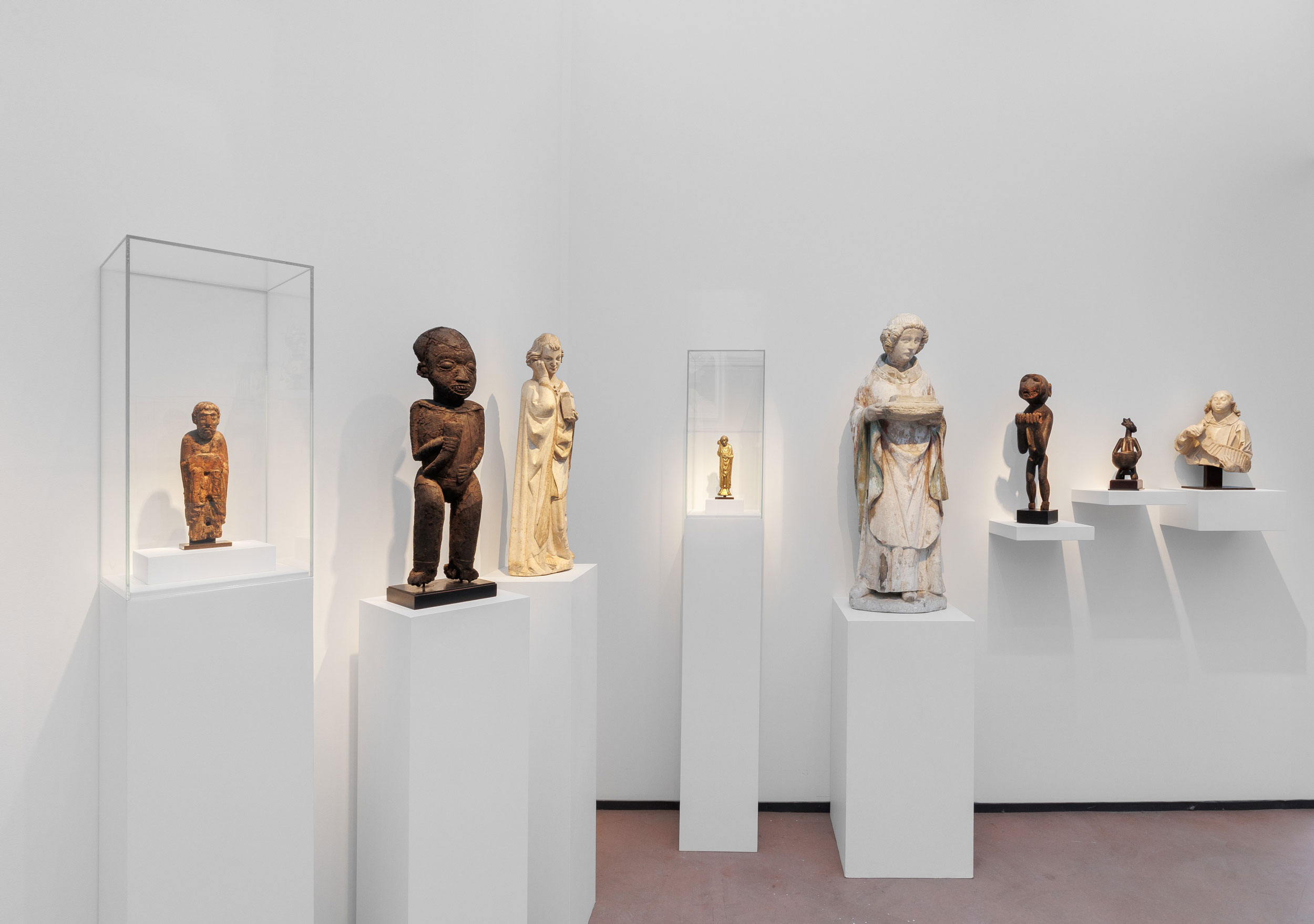
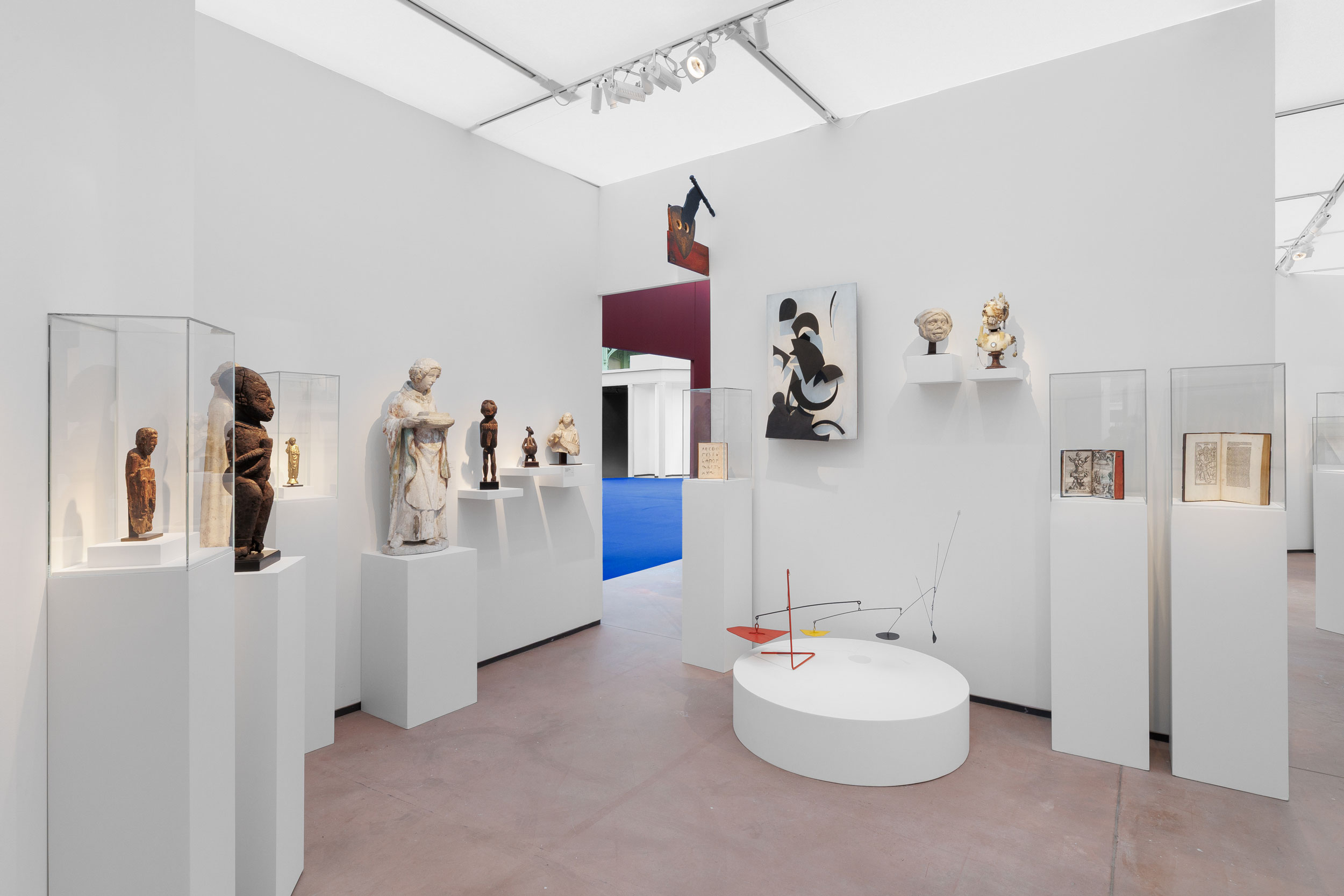
At the heart of the Grand Palais, these five galleries have come together on a large shared stand where the pieces selected by Jean-Hubert Martin are brought together according to a principle of sequences he has devised, allowing a progression through formal analogies between the artworks. At the beginning of the exhibition, a dove holds a revolver bullet in its beak, a work by Pilar Albarracín. At the end of the exhibition, visitors can see a woman lying on the ground through openings in the partitions; this is a polychrome bronze by John DeAndrea. Between these two works, more than 135 artworks, paintings, sculptures, books, and objects, compose a journey in which sensibility, and at times humor, have taken the place of the usual chronology of art history.
Excerpt from the catalogue:
“The ancients stole all our ideas from us.” — Mark Twain
“The sacredness that haloes the work of art, however, comes with greater freedom for the collector. One behaves in a museum somewhat like in a church, conforming to a respectful attitude and avoiding speaking too loudly. A form of gravitas is required in the face of what is considered the seriousness of art. Yet this would mean overlooking the fact that it is not always so, as we can see with contemporary art. Humour has always been present in art, even in religious art, at least until the Renaissance. Visitors are rarely heard laughing in museums of ancient art, even though these offer frequent opportunities when approached with a more casual attitude. It is as if there were only drama and tragedy in the theatre, and comedy was forbidden. One only needs to spend a little time with artists, even those dealing obsessively with death, to know they are far from being the saddest kind. Humour, even when scandalous, remains an essential palliative for the fear of death. In fact, it finds its place more easily in private homes than it does in institutions.”.
Jean-Hubert Martin